Badminton Court Construction
Build Professional Badminton Courts with Precision Engineering
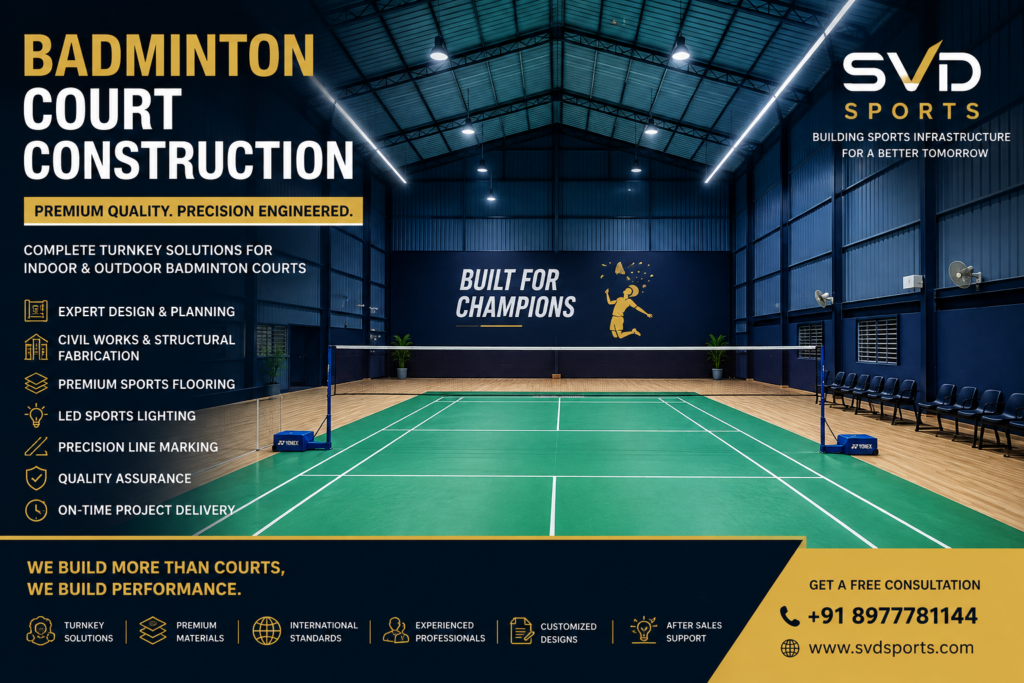
SVD Sports delivers premium Badminton Court Construction solutions for schools, sports academies, clubs, residential communities, commercial projects, and government institutions. Our turnkey construction services cover everything from site development and structural engineering to sports flooring, lighting, roofing, and final quality inspection, ensuring world-class badminton facilities built for long-term performance.
Premium Badminton Court Construction Services
A professionally designed badminton court is more than just a playing surface—it is a carefully engineered sports environment that enhances player safety, performance, and long-term durability. At SVD Sports, we specialize in Badminton Court Construction by delivering complete turnkey solutions that combine innovative engineering, premium-quality materials, and superior craftsmanship.
Our construction process begins with a detailed site assessment, where our experts evaluate soil conditions, available space, drainage requirements, and project objectives. Based on this analysis, we develop customized construction plans that ensure structural stability, optimal playing conditions, and efficient use of space.
Our services include civil foundation works, steel structural fabrication, roofing systems, ventilation planning, LED sports lighting, PVC vinyl flooring, wooden badminton flooring, synthetic sports surfaces, precision line marking, and final quality inspections. Every project is executed under strict quality control to meet international standards while maintaining outstanding aesthetics and durability.
Whether you require a single indoor badminton court or a large multi-court sports complex, SVD Sports provides reliable engineering solutions that deliver exceptional functionality, premium finishes, and long-term value.
Our Complete Badminton Court Construction Process
Every successful Badminton Court Construction project follows a systematic process designed to ensure quality, safety, and lasting performance.
Site Survey & Consultation
Our specialists inspect the project site, assess soil conditions, measure dimensions, and understand your vision before preparing a customized execution plan.
Planning & Engineering Design
We create optimized layouts, structural drawings, drainage systems, and lighting plans that maximize functionality and player comfort.
Civil Foundation Works
A strong and level foundation is constructed using high-quality materials to provide long-term structural stability.
Steel Structure & Roofing
We fabricate and install durable steel structures with premium roofing systems designed to protect the court from weather while ensuring proper ventilation.
Sports Flooring Installation
We install premium wooden flooring, PVC vinyl sports flooring, or synthetic flooring systems with excellent shock absorption and playing comfort.
Court Marking & LED Lighting
Professional line markings and high-performance LED sports lighting are installed to ensure excellent visibility and compliance with standard court dimensions.
Quality Inspection & Project Handover
Before handover, every component undergoes rigorous inspection to ensure superior workmanship and complete customer satisfaction.
Features of Our Premium Badminton Courts
International Standard Court Dimensions Premium PVC Vinyl Flooring Wooden Sports Flooring Synthetic Sports Surfaces High Shock Absorption Anti-Slip Playing Surface Steel Structural Roofing Energy-Efficient LED Sports Lighting Weather-Resistant Construction Professional Court Line Marking Excellent Drainage System Low Maintenance Long Service Life Custom Court Designs Turnkey Project Execution
Ideal Applications
Our Badminton Court Construction solutions are suitable for a wide range of residential, institutional, commercial, and recreational projects.
Ideal applications include:
- Schools and Educational Institutions
- Colleges and Universities
- Professional Sports Academies
- Indoor Sports Complexes
- Residential Communities
- Clubhouses
- Hotels and Resorts
- Corporate Campuses
- Fitness Centers
- Government Sports Facilities
- Community Recreation Centers
- Commercial Sports Clubs
- Multi-Sport Indoor Arenas
Every badminton court is customized to meet the operational, aesthetic, and performance requirements of the client while maintaining exceptional construction quality and long-term durability.
Why Choose SVD Sports for Badminton Court Construction?
Complete Turnkey Solutions Experienced Sports Infrastructure Specialists Premium Construction Materials Customized Court Designs International Construction Standards Advanced Engineering Techniques Timely Project Completion Transparent Project Management Dedicated Technical Support PAN India Project Execution Strict Quality Control Long-Term Structural Reliability Competitive Pricing Excellent After-Sales Service
Build Your Professional Badminton Court with SVD Sports
Whether you are planning a single indoor badminton court or a complete multi-court sports facility, SVD Sports delivers turnkey construction solutions tailored to your requirements. Our experienced engineers, premium materials, and commitment to quality ensure every project is completed with precision and professionalism.
Contact us today for a free consultation and discover how our Badminton Court Construction services can transform your vision into a world-class sports facility.
Contact Us: +91 8977781144